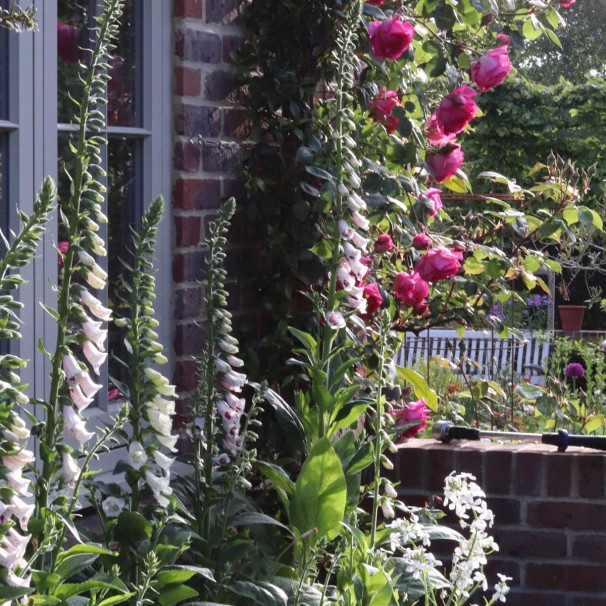
This month marks the end of our first full year of writing this newsletter. We hope that our top jobs are useful prompts each month and that you enjoy keeping up with the news on both of our Diploma Courses as well as the many short courses and visits that are now on offer.
Through writing these newsletters over the last year, it’s clear that what drives us at The English Gardening School is the love of plants and of gardening. As we move into the growing season, we look forward to continuing to share more inspirational images and knowledge with you.
Welcome to The English Gardening School June Newsletter
CHELSEA FLOWER SHOW
and the EGS Community
Chelsea Flower Show is not only a great showcase for design talent and for the growers that make our wonderful designs possible, but it is also a huge event for the whole garden design community, where we network and make new connections as well as gain inspiration. This kind of in person interaction drives the industry forward.
Many themes were explored at this year’s Chelsea Flower Show, but one that really got garden designers talking was Matt Keightley’s showcase for his new AI Garden app ‘Spacelift’.
While many may be appalled at using AI at all, never mind using AI to design gardens, this new app is certainly provoking thought and conversation and that is always a good thing. At the EGS we take a wide view on technology generally. We may hand draw on the design diploma, but we keep very much up to date on what design tools are being used in the industry and AI is certainly another tool that is going to be useful to garden designers going forward.
At the same time, this conversation reminds us of all the things that AI can’t possibly do, and those things rest with creativity, taste, judgement and curation based on human experience as well as collaboration with the wider horticultural community.
We’re fortunate to be in an industry where, at the end of the day, we primarily deal with real-life soil, plants, garden creatures, materials and most importantly, people. Communicating with people, whether they are our clients, supplying products or building our gardens, is fundamental to how we teach, which is why we have a landscaper and a supplier as tutors on our Essential Garden Design Diploma, as well as bringing in designers.
Community is enormously important to us. Rosemary always said ‘once you join the EGS you never leave’, and it’s true that we keep in touch with many of our graduates and tutors once they’ve left – now through this newsletter as well as through our shorter courses, garden visits, Instagram, and of course email or an old fashioned phone call.
As the world becomes increasingly digital, the value of in-person learning and being part of a wider community of fellow graduates and expert tutors has never been more important.
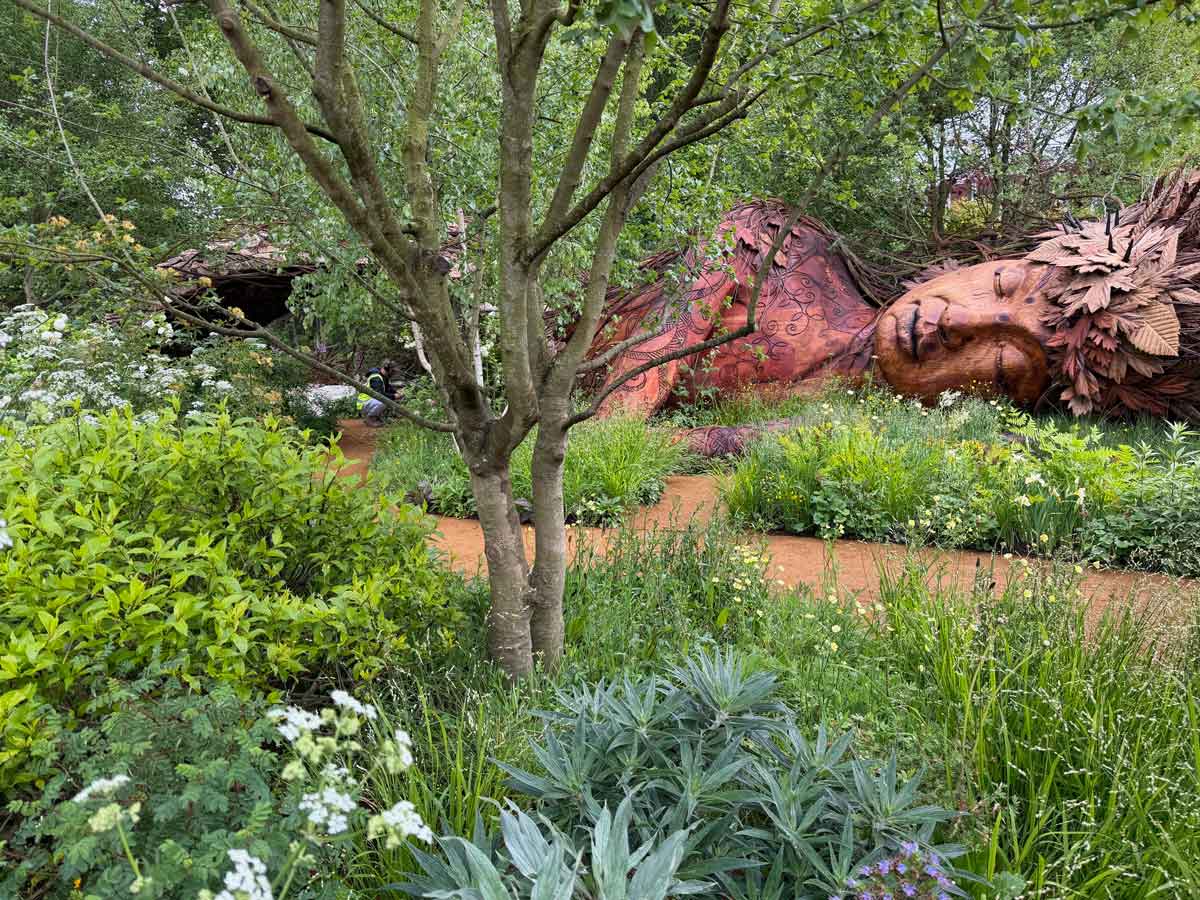
On the Edge, Sarah Eberle’s Garden of the Year at RHS Chelsea Flower Show 2026
This year, Sarah Eberle, who led our planting design days on the Good Gardening Diploma and was our guest speaker for our Design Diploma’s Graduation day and handed out diplomas, is one of only two female garden designers on Main Avenue at the Chelsea Flower Show. Sarah holds a record-breaking 20 gold medals already. We’re proud to have such a pioneering designer on our team who continues to share her wealth of experience and raise important issues in every show garden she designs.
Majestic Trees on the other hand, had their first show garden this year. We visit this high-quality trade nursery on The Essential Garden Design Diploma, not just to see their trees but to listen to Eliot Barden there, who lectures students on trees for climate change and tree specification.
You can catch clips of our interviews with Sarah and Majestic Trees on our Instagram page, as well as with growers Rose Hardy and Hortus Loci, who are also part of our design course.
GOOD GARDENING
This month, we asked our regular tutor, Ed Flint, to share his tips on biennials. These invaluable plants are often overlooked in the garden, as sowing seeds in June for displays the following May can easily be forgotten amid all the colour and activity of the early summer garden.
Ed teaches on our One Year Good Gardening Diploma, bringing his wealth of knowledge and experience to the classroom. New to the 2025/26 Diploma course, we spent a day in May visiting both Ed’s own garden and Great Dixter, where he began his training. The students thoroughly enjoyed the experience, as one commented:
“Thank you so much for organising yesterday. Ed’s garden – what a genius, brilliant communicator and passionate gardener. Fascinating to see the Great Dixter after years of GQT references, and goodness, it was even better than my imagination allowed: structure, planting, vision – fascination on every level.”
Visiting gardens in the company of experts changes the way we see them, and we will be adding this inspiring day to our regular timetable going forward.
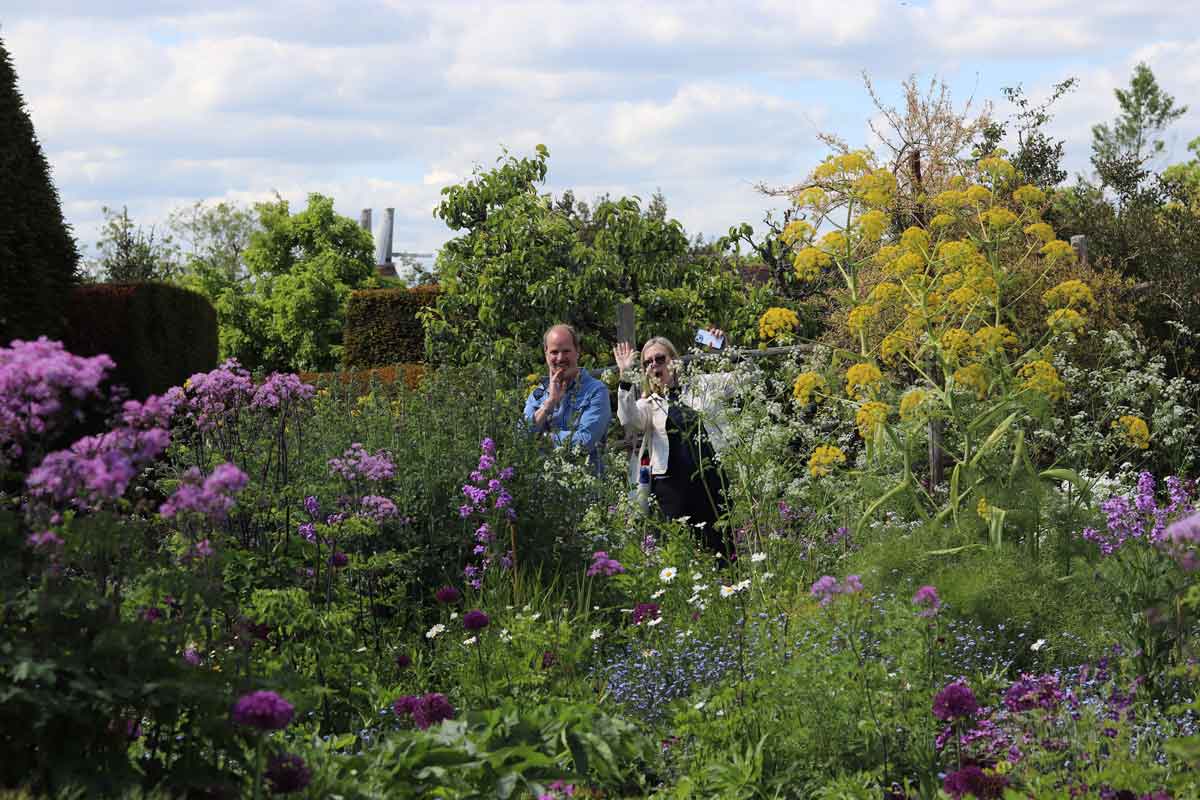
One Year Good Gardening students at Great Dixter
SOWING BIENNIALS
Good Gardening Tutor Ed Flint
Biennials; plants that are sown in one year to grow on and make big, fat healthy plants that flower the following year, are an overlooked group. Their cultivation and use are unfamiliar and slightly at odds with much of the calendar and thinking in contemporary gardens. They have much to offer – wallflowers can be used in pots of spring bulbs, bedded out or threaded through borders, adding significant pizzazz to tulip time.
Towering foxgloves bring contrast to the innate “blobbiness” of the June rose garden, clouds of eye-catching yellow woad bring life to borders and hesperis give great impact and some height for very little horizontal space on the ground. Sweet Williams are marvellous for brightening up border fronts and for some reason have in my mind an affinity for corners at a time before the great mass of summer flowering perennials have hit their straps…
Having tried to grow them in pots, with at best moderate success, I am increasingly convinced by old-school open-ground growing, which enables plants to get through the hot, dry days of summer with greatly reduced stress. Most biennial seeds are sown in pots and trays of peat-free seed compost in early June.
Placed in an outdoor seed-frame or unheated greenhouse, germination is rapid. As soon as they are big enough to handle, the plants are pricked out into 7cm pots or, better still, deep plug trays of peat-free John Innes Number 2. Kept outdoors and watered as necessary, growth is rapid. After just a few weeks, the seedlings should be large enough to be “lined out”; planted into the ground in good fertile soil, usually in a corner of the kitchen garden.
Exceptions that seem resentful of open-ground cultivation and the inherent root disturbance are Matthiola incana, Angelica sylvestris and Anthriscus ‘Ravenswing’ which are better grown in pots and potted on as necessary.
Open-ground plants can be pretty much left to their own devices, watered and weeded if necessary, before being gently lifted and transplanted into borders, beds and pots as space from failing summer annuals or lifted tender perennials becomes available in October or November, giving interest and impact the following late spring and early summer.
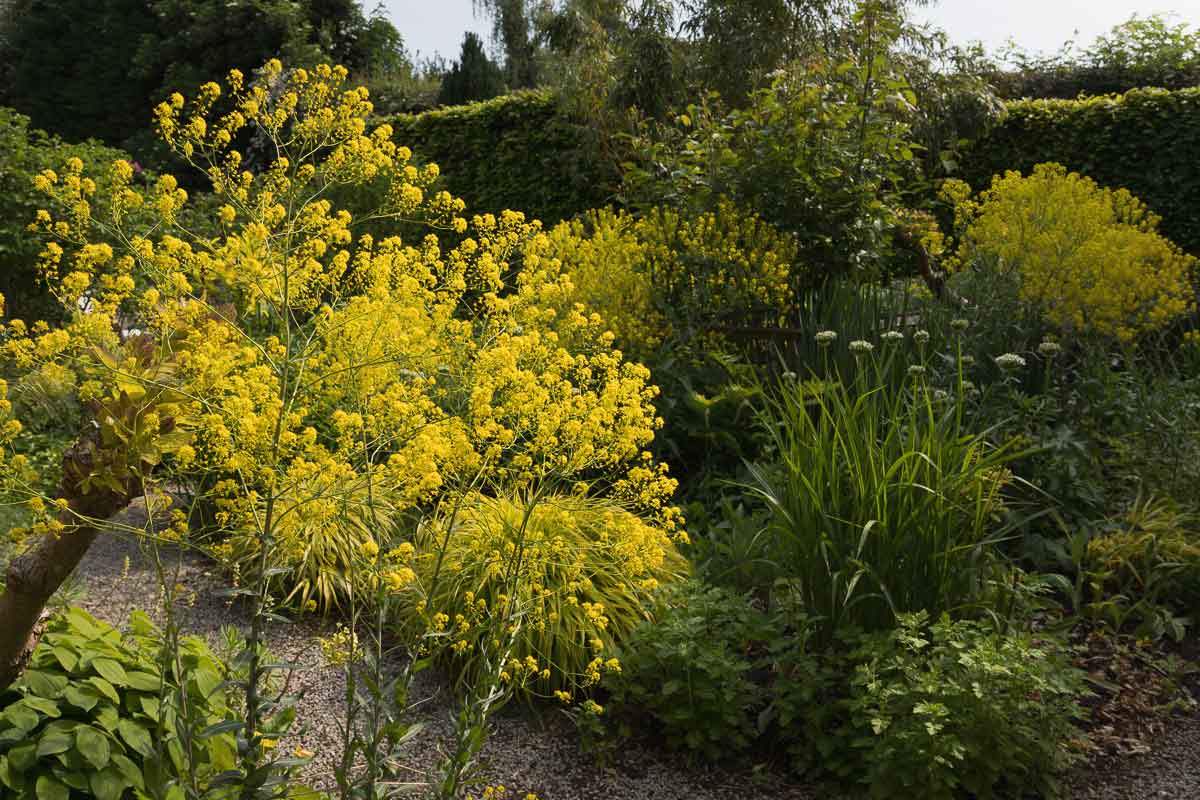
Isatis tinctoria, a wonderful biennial perfect for the bees. Photo from the garden of Ed Flint, with thanks to Nicky Flint
PLANT OF THE MONTH
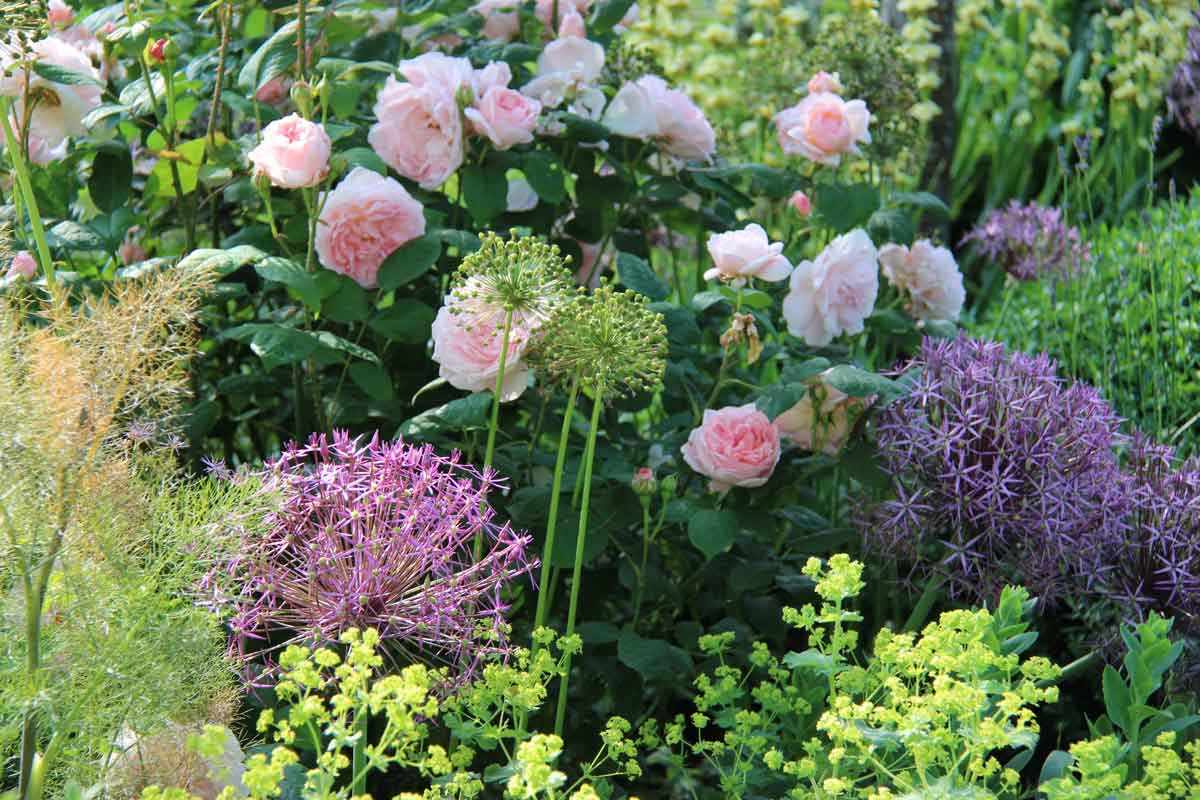
Allium cristophii
Our favourite perennial allium, slightly later in the season, following from our other favourite Allium hollandicum ‘Purple Sensation’ for which you can see the seed head behind. These two alliums flower in succession, are both reliably perennial and will self-seed. Remove the brown leaves as they die off for the best display or plant amongst other perennials and grasses to ensure the tatty leaves are covered.
Be careful planting alliums with large leaves amongst delicate perennials that may not be able to compete with the aggressive foliage of the alliums. Shown here with Rosa Eglantine (‘Ausmak’), Alchemilla mollis (another of our favourite plants for early June), and the early foliage of Foeniculum vulgare ‘Giant Bronze’.
TOP JOBS
to do in the garden in June
- WATERING
Water early in the morning using a lance at the base of the plants. Normally we avoid too much watering, but it has been exceptionally dry. Don’t forget your trees, too. Young trees especially need a good soak. Soak small pots completely in a bucket until the bubbles stop rising. - PLANTING
Honestly, best avoided while it’s this dry. But if you must plant, soak every pot thoroughly for at least an hour beforehand, water the hole before planting and water deeply after planting. - FEEDING
Feed pots, sweet peas, dahlias and pelargoniums weekly alternating between seaweed and tomato feed. - ROSES
Don’t wet the leaves in the evening — it encourages blackspot. Deadhead regularly to encourage repeat flowering but leave the heads of any that you are growing for hips. Remove diseased foliage as you go. If a rose is really miserable and diseased, sometimes the answer is, in the words of our esteemed tutor Michael Marriott, simply: ‘PRUNE WITH A SPADE!’ - CLIMBERS
Stay on top of tying in climbers while stems are soft and flexible. Use extra screws and supports where needed. When training climbing roses over pergolas, keep one or two long stems growing straight up and across the top, while wrapping the others around the uprights. - BOX
Continue the feeding and spraying regime now, keep a very close eye out for caterpillars. - MOVING PLANTS
Too late now. Wait until autumn when conditions are cooler and wetter. - BIENNIALS
Now is the time to sow biennials for next year’s displays. Sow into trays or a nursery bed and keep watered during dry spells. These will establish this summer, overwinter quietly, and give you fantastic early colour next spring and summer.
UPCOMING COURSES AND VISITS
Study Day with Troy Scott Smith – ‘The Making of a Garden’
18th June 2026 – SOLD OUT
For: English Gardening School Alumni only
Garden Tour – The Barn and Old Bladbean Stud
25th June 2026 10.30am to 3pm
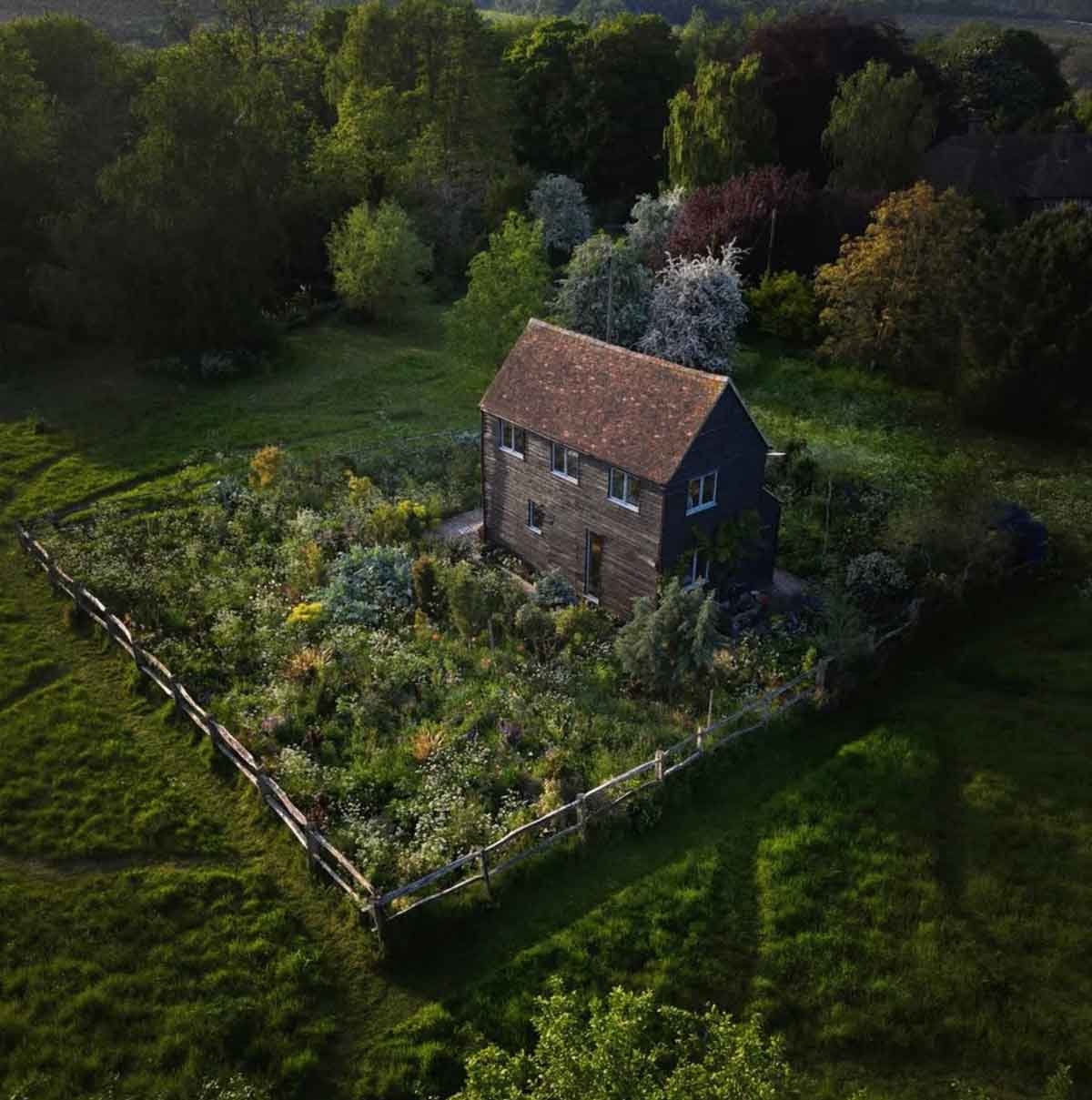
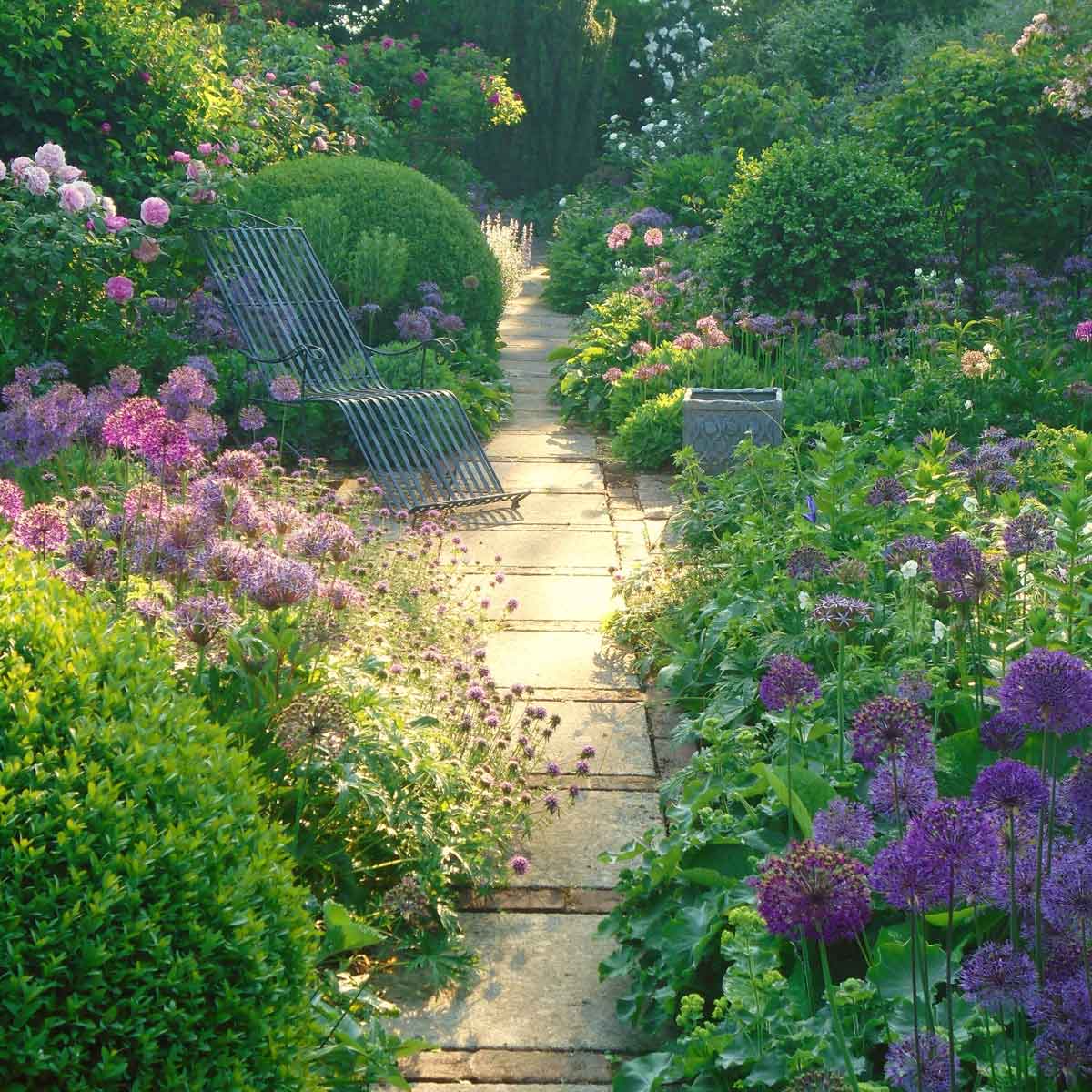
The Barn and Old Bladbean Stud
We have just a few spaces left on our EGS Summer Garden Tour to two wonderful gardens in Kent. Our Summer Garden Tour starts at the home of Andy Salter, who you may know from his Instagram @big_drewland. Andy’s garden is stuffed full of interesting plants. What a treat for the plant enthusiast.
From there, we will go on to Old Bladbean Stud, created by Carol Bruce, voted The Nation’s Favourite Garden in the South East by readers of The English Garden magazine, where we will have time for picnics before our talk from Carol and garden tour. Carol’s beautiful book ‘In Nature’s Slipstream’ was published in May if you’d like to read all about her approach.
Inspired by the mixed borders at Great Dixter, special effects artist Andy Salter has created a captivating plantsman’s paradise around his black-painted barn in Kent. His garden has been featured in Gardens Illustrated and in Clare Foster and Andrew Montgomery’s beautiful book Pastoral Gardens. Rarely open to visitors, Andy’s atmospheric garden, surrounded by a wildflower meadow, has also appeared on BBC Gardeners’ World and Channel 4’s Garden of the Year.
Join us for a special morning as Andy personally guides us through his remarkable garden.
Driven to find a new balance between a wild and cultivated environment that could bring artistry, sustainability and resilience onto the same page, Carol Bruce created her garden at Old Bladbean Stud on 3 acres of abandoned ground as a living experiment in harnessing natural processes rather than dominating them.
Shaped by a combination of landscape-inspired design techniques and ecological maintenance and planting practices, the 23 year old garden is now a self-sustaining ornamental ecosystem where the gardener and nature work in harmony and the needs of both are met entirely within the constraints of the natural world.
EGS Autumn Garden Tour – Ashington Manor and Yews Farm, Somerset
Thursday 17th September 2026
Join us for a special opportunity to visit two exceptional private gardens in the Somerset countryside, each offering a distinctive approach to planting, design and landscape. This exclusive tour includes access to Ashington Manor, home of renowned designers Isabel and Julian Bannerman, and Yews Farm, created by Louise and Fergus Dowding.
Ashington Manor
The gardens at Ashington Manor, created by Isabel and Julian Bannerman, surround a historic house and are designed with a strong sense of structure, atmosphere and narrative. The layout combines formal elements with more informal planting, creating a series of distinctive garden spaces. Features include carefully composed vistas, architectural planting, and the use of ornament and built structures to frame views and define areas within the garden.
Planting is rich and layered, with an emphasis on seasonal interest, texture and contrast. The garden reflects the Bannermans’ characteristic approach, blending traditional influences with imaginative design, resulting in a setting that feels both established and evolving.
Julian and Isabel Bannerman have been designing gardens and garden buildings together since 1983. Gardens the school is familiar with include the Walled Garden at Arundel Castle and the Long Walk and Entrance Garden at Woolbeding. Isabel and Julian won House & Garden Magazine’s Designers of the Year 2023 and were granted the Royal Warrant of His Majesty King Charles III in 2024. They strive to create magical places which are also for living in.
Yews Farm
At Yews Farm, Louise and Fergus Dowding have created a highly distinctive garden centred on a large, south-facing walled space. Planting is bold and theatrical, with an emphasis on height, form, foliage and texture, complemented by extensive box topiary. The garden combines both low-maintenance perennial planting and more intensively managed container displays.
Productive elements are fully integrated, with vegetables and cut flowers grown together, alongside a working organic kitchen garden and greenhouses filled with seasonal crops. An organic orchard of local cultivars forms part of the wider setting, with free-roaming hens adding to the character of the garden. Self-seeding is actively encouraged, allowing the planting to evolve naturally over time. Managed entirely without artificial chemicals, the garden supports a balanced and self-sustaining ecosystem.
Wildlife is allowed to thrive without intervention, contributing to the overall health and resilience of the garden.
Click below for further information and to book.
Gardening for Beginners
30th September & 1st, 7th, 8th October 2026
Very few places remaining.
As the spring Gardening for Beginners is sold out, we have added autumn dates for this popular four day course, led by Master of Horticulture Ben Pope.
The course, which takes place at The Chelsea Physic Garden, covers all you need to know to care for your garden – understanding your soil, choosing and selecting new plants, growing new plants from seed and taking cuttings, common pests and diseases, lawn care, pruning trees, shrubs and climbers, vegetable and fruit growing, control of weeds, mulching and composting. The final day, spent in 2 private gardens, brings everything into context and gives time for questions and personal involvement.
Introduction to Garden Design
14th & 15th October 2026
Do you have ideas for your garden but struggle to know how to turn them into a successful design?
This practical and highly visual two-day course introduces the essential principles of garden design, helping you understand how to organise and shape outdoor space with confidence.
Led by former architect, experienced tutor and garden designer Catriona Rowbotham, with assistance from award winning Garden Designer Penelope Hill Smith and lecture from award winning garden designer Richard Miers, the course focuses on the fundamentals of designing garden space. Through a combination of lectures, demonstrations and hand drawn exercises, students will learn how to analyse a site, work with scale drawings, and create balanced and functional garden layouts.
This course will be held at the Chelsea Physic Garden and you can read more details on the link below.
Planting Design with Nick Bailey
21st to 22nd October 2026, 18th to 19th November 2026
Join us for an intensive 4 day planting design course with Nick Bailey, one of the UK’s leading plantsmen and garden designers. Nick is known for his interactive teaching style, dynamic design approach, and innovative ideas in the art, craft, and science of planting design.
This course is designed for keen gardeners and garden designers seeking to refine their approach to planting in their own gardens or for clients. Nick covers a range of approaches to planting design, and students will be introduced to numerous plants they may never have considered growing. Nick will also share his wealth of experience in creating tailored plantings for a wide range of environments and styles, along with recommendations for top nurseries and inspiring gardens to visit.
Nick will share the techniques, plants and approaches behind his beautiful planting style. Discover a wide range of unusual and useful annuals, bulbs and exotics to enhance planting schemes. Explore the nature of genius loci and how to plant in tune with the wider landscape.
The final day of this four day course explores case studies from Nick’s and other award-winning designers’ work. Using real garden examples, Nick will show students how the ideas, techniques and plant combinations discussed throughout the course are applied in practice. Nick will discuss his rationale for each scheme, revealing how planting choices respond to place, scale, and atmosphere, and how designs evolve over time.
This concluding day offers inspiration, clarity and confidence to help students apply these approaches to their own gardens and planting projects.
This is a 4 day course held at the Chelsea Physic Garden.